|
MRO Special Edition · Issue 01-SE
May 2026 · humanhoist.com
|
|
|
|
Special Edition · Aerospace MRO |
MRO Special Edition
The Body Behind the Wrench — What the Data Says About Your Workforce
|
|
|
|
54
Median Age
US A&P Mechanic
|
|
27%
Of FAA Mechanics
Are Over Age 64
|
|
$75K
Cost to Replace
One Mechanic
|
|
48K
Projected N. American
Shortfall by 2027
|
|
|
|
|
Workforce + Safety + Cost
Your Most Experienced Technicians Are Also Your Most Vulnerable — And the Numbers Prove It
The average U.S. aircraft mechanic is 54 years old. One in four is over 64. They are the most skilled people in any MRO facility — and they are working in positions that were never designed for the human body. The financial and operational cost of ignoring this is becoming impossible to defer.
Walk through any MRO hangar during a heavy check and the story tells itself. Technicians are on their knees on concrete for hours. They are working flat on their backs under fuselages. They are reaching overhead into wheel wells, contorting into access panels, and holding awkward positions for far longer than any occupational health guideline would recommend. This is not a new reality — but the workforce performing this work is aging, and the compounding effect of years of physical strain is accelerating injury rates at exactly the moment when replacing those workers has never been harder or more expensive.
|
“Employees nearing retirement — ages 55 to 60 — make up 35% of the MRO industry, while those aged 18 to 30 account for only a single-digit share.”
— IFS / Aviation Pros, September 2025
|
The Bureau of Labor Statistics specifically notes that aircraft mechanics and service technicians “may need to work in uncomfortable positions, such as crouching or lying on the ground and reaching overhead, for long periods.” That is the official government description of the job. The physical demands are baked into the role — what has changed is who is doing it and what it costs when their bodies give out.
Musculoskeletal disorders (MSDs) — sprains, strains, soft tissue injuries — are the single largest category of workplace injuries in the United States, accounting for nearly one-third of all serious claims according to OSHA 2024 data. In maintenance and repair environments, where repetitive motion, awkward postures, and sustained physical load are constant, the rates are even higher. OSHA estimates workers’ compensation medical costs for a single MSD case range from $30,000 to $80,000. That is before the indirect costs: lost productivity, overtime for remaining crew, and the cost of recruiting and training a replacement in a market already running 10% short.
|
|
|
|
|
|
MRO Americas 2026 · Orlando, FL
The Problem Was Everywhere at MRO Americas — Even in the Marketing Materials
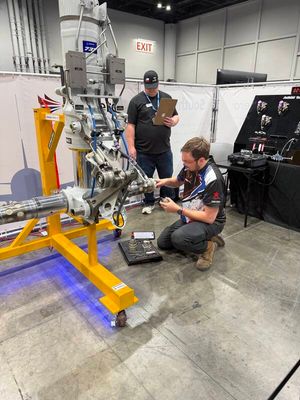
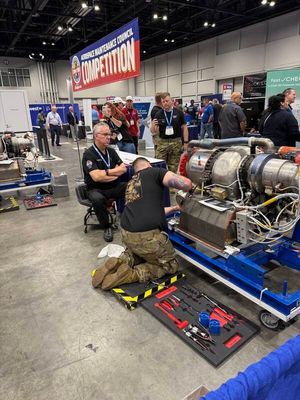
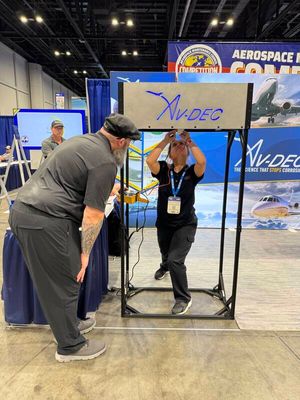
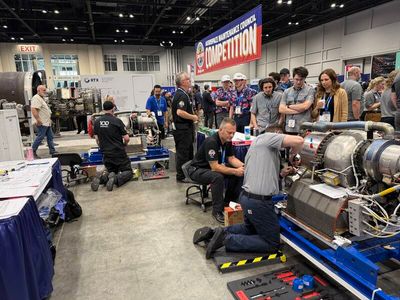
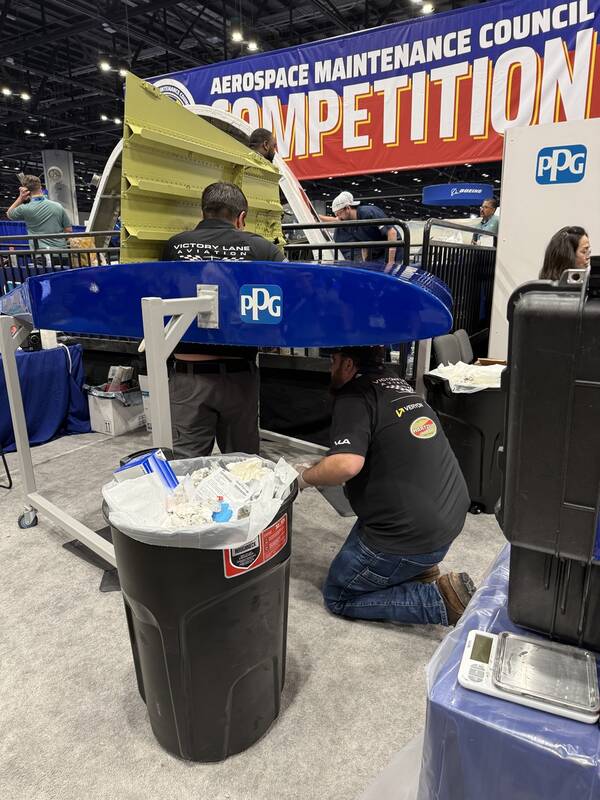
At MRO Americas in Orlando this spring, thousands of the industry’s best technicians gathered to compete, collaborate, and demonstrate their craft. The skill on display was extraordinary. So was the posture. Across competition stations and vendor booths alike, the same patterns appeared: mechanics kneeling on hard floors, crouching at low access points, reaching under engines with no body support. In some cases, even the marketing imagery used by exhibitors showed technicians in positions that ergonomic specialists would flag immediately. This is not a criticism of the individuals — it is simply the nature of the work. But it does raise a direct question: if the industry’s showcase event is where we put our best forward, what does a routine 12-hour shift look like?
|
|
|
|
|
|
The Ergonomic Reality
Kneeling on hard surfaces for 30+ minutes generates spinal compression forces well beyond recommended limits. Sustained forward-lean postures without back support increase lumbar disc pressure by up to 150% compared to neutral standing. These are not hypothetical risks — they are the documented mechanics of how repetitive MSD injuries develop over a career.
|
|
|
|
|
|
The Cost of Doing Nothing Is Already On Your Books
These are not projections. They are current figures from the BLS, ATEC, Aviation Week, and OSHA.
|
|
$30K–$80K
Per MSD Workers’ Comp Claim
OSHA estimates for medical costs alone — before indirect costs like overtime and retraining are factored in.
|
|
$50K–$75K
To Replace One Technician
Aviation Week: recruiting ($3K–$6.5K) + training to full proficiency ($15K–$25K) + lost productivity ($20K–$30K).
|
|
|
#1
Injury Type in Maintenance
Sprains, strains, and soft-tissue injuries are the most commonly reported MSDs — driven by overexertion and awkward sustained posture. (BLS / OSHA 2024)
|
|
$18B+
Annual US MSD Direct Cost
Direct costs only — medical treatment, comp claims. Indirect costs (productivity, retraining, morale) can double or triple this. (OSHA 2024 / VelocityEHS)
|
|
|
The Pipeline Reality
North America is already short 24,000 certificated mechanics. That deficit is projected to reach 40,000–48,000 by 2027–2028.
|
|
In that environment, an injured mechanic isn’t just a comp claim. They represent institutional knowledge that cannot be quickly replaced. Prevention is not a cost center — it is a retention strategy.
|
|
|
|
|
|
|
Built for the Work. Designed Around the Worker.
Human Hoist makes personal positioning technology for the people doing the most physically demanding work in aviation, heavy equipment, and agriculture. Two products. One mission: get your technicians to the work without the body taking the hit.
|
|
Product 01
The Human Hoist Chair
|
 |
|
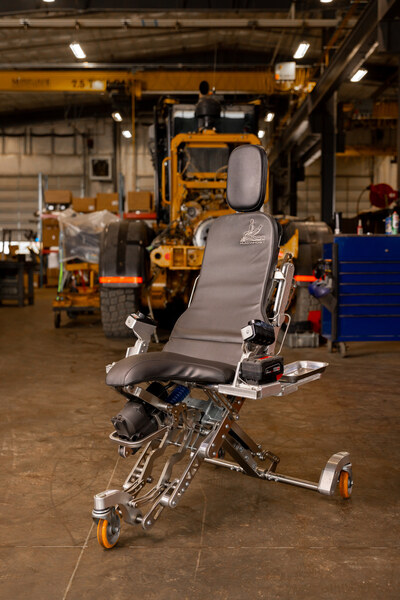
The Human Hoist Chair is a motorized personal positioning system that transitions from fully upright seating to a flat recline position — and every angle in between. Built on a heavy-duty steel and aluminum frame with industrial casters and proudly made in the USA, it puts the mechanic at the work rather than forcing the work onto the mechanic.
| → |
Full upright-to-flat motorized recline — eliminates unsupported lying on concrete floors |
| → |
Integrated tool tray keeps instrumentation within reach at any angle |
| → |
Designed specifically for under-aircraft and low-clearance maintenance access |
| → |
Battery-powered — no cords, no air lines, fully mobile on the hangar floor |
|
|
 |
|
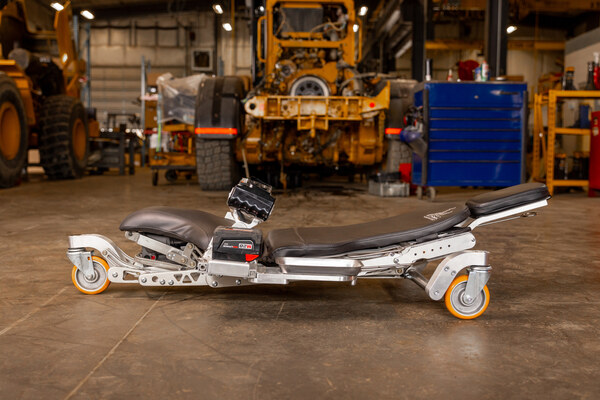
The Human Hoist Chair in full recline — the position designed to replace lying flat on concrete for belly access and under-fuselage maintenance.
|
|
|
Product 02
The Human Hoist Stool
|
|
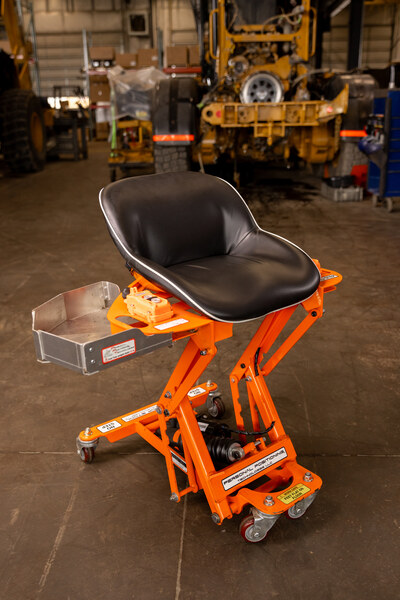
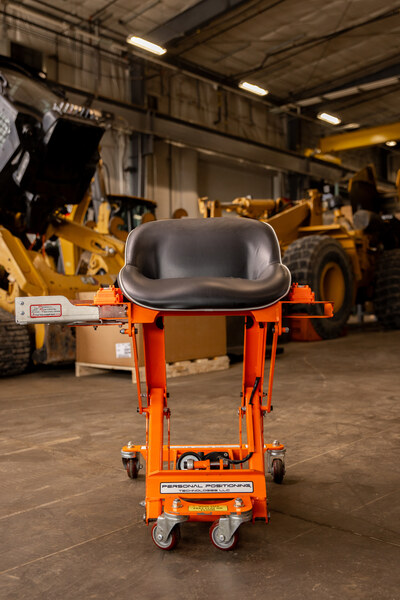
The Human Hoist Stool is a hydraulic-lift positioning seat that raises and lowers the technician to the exact height the task demands — eliminating the bent-over, half-squat stance that is responsible for more cumulative back injuries than any other single posture in mechanical maintenance.
| → |
Hydraulic height adjustment — match the seat to the task, not the other way around |
| → |
Integrated tool tray — keeps parts and instruments within reach at every height |
| → |
Rolling casters for full hangar mobility — goes where the work is |
| → |
Heavy-duty construction rated for real industrial environments — not a workshop stool |
|
|
 |
|
 |
|
The Human Hoist Stool — hydraulic height adjustment eliminates the half-squat and bent-back postures that generate the majority of cumulative MSD injuries in hangar maintenance environments.
|
|
|
|
|
|
The Aerospace Industry Is Already Taking Notice
Human Hoist is not a concept — it is a product in active use in aerospace and aviation MRO environments. Our positioning technology is gaining traction with maintenance organizations that have looked at their injury data, their workforce demographics, and their technician retention numbers and decided that the status quo is not a viable path forward.
MRO Americas was a validation of the problem and the solution. The conversations on that show floor were not about whether ergonomic positioning tools have a place in aviation maintenance — they were about why it took so long for purpose-built tools to arrive. The creeper and the shop stool have not fundamentally changed in 80 years. The aircraft they are used under have. The workforce using them has. It is time the tools caught up.
|
 |
|
Why MRO Operations Are Choosing Human Hoist
| → |
Measurable injury reduction — positioning support directly targets the body mechanics that generate strains and sprains in maintenance environments. |
| → |
Extended career viability — experienced technicians work more comfortably for more years. In a shortage market, keeping your best people healthy is a competitive advantage. |
| → |
ROI that is easy to calculate — a single prevented workers’ comp claim pays for multiple units. Favorable pricing is available for multi-unit fleet orders. |
| → |
OSHA compliance support — documented ergonomic programs and purpose-built tools provide a defensible paper trail in environments facing increasing MSD scrutiny. |
|
|
|
Ready to Talk?
Let’s talk about what the right positioning tool looks like for your operation.
Whether you are managing a single MRO bay or a multi-site maintenance operation, we are happy to walk through both products, answer technical questions, and discuss what multi-unit pricing looks like for your team. No pressure — just a conversation grounded in the data and the work.
|
|
Personal Positioning Technologies, LLC
|
|
|
|
© 2026 HumanHoist · Personal Positioning Technologies, LLC · All rights reserved
|